what is the method of reasoning that involves using specific facts to form a conclusion
Deductive reasoning vs. Inductive reasoning
You don't have to exist Sherlock Holmes to use your powers of deductive reasoning … or would that be inductive reasoning?
What's the difference between anterior and deductive reasoning?
During the scientific process, deductive reasoning is used to reach a logical and true determination. Another type of reasoning, inductive, is also commonly used. People often confuse deductive reasoning with inductive reasoning; all the same, important distinctions split up these ii pathways to a logical conclusion.
What is deductive reasoning?
Deductive reasoning, also known as deduction, is a basic form of reasoning. It starts out with a general statement, or hypothesis, and examines the possibilities to reach a specific, logical conclusion, according to Norman Herr (opens in new tab), a professor of secondary instruction at California Country Academy in Northridge The scientific method uses deduction to test hypotheses and theories, which predict certain outcomes if they are correct, said Dr. Sylvia Wassertheil-Smoller, a researcher and professor emerita at Albert Einstein College of Medicine.
"We get from the general — the theory — to the specific — the observations," Wassertheil-Smoller to
In deductive reasoning there is a first premise, then a second premise and finally an inference (a conclusion based on reasoning and evidence). A common class of deductive reasoning is the syllogism, in which two statements — a major premise and a minor premise — together achieve a logical conclusion. For example, the major premise "Every A is B" could exist followed past the minor premise, "This C is A." Those statements would lead to the conclusion "This C is B." Syllogisms are considered a good way to exam deductive reasoning to brand sure the argument is valid.

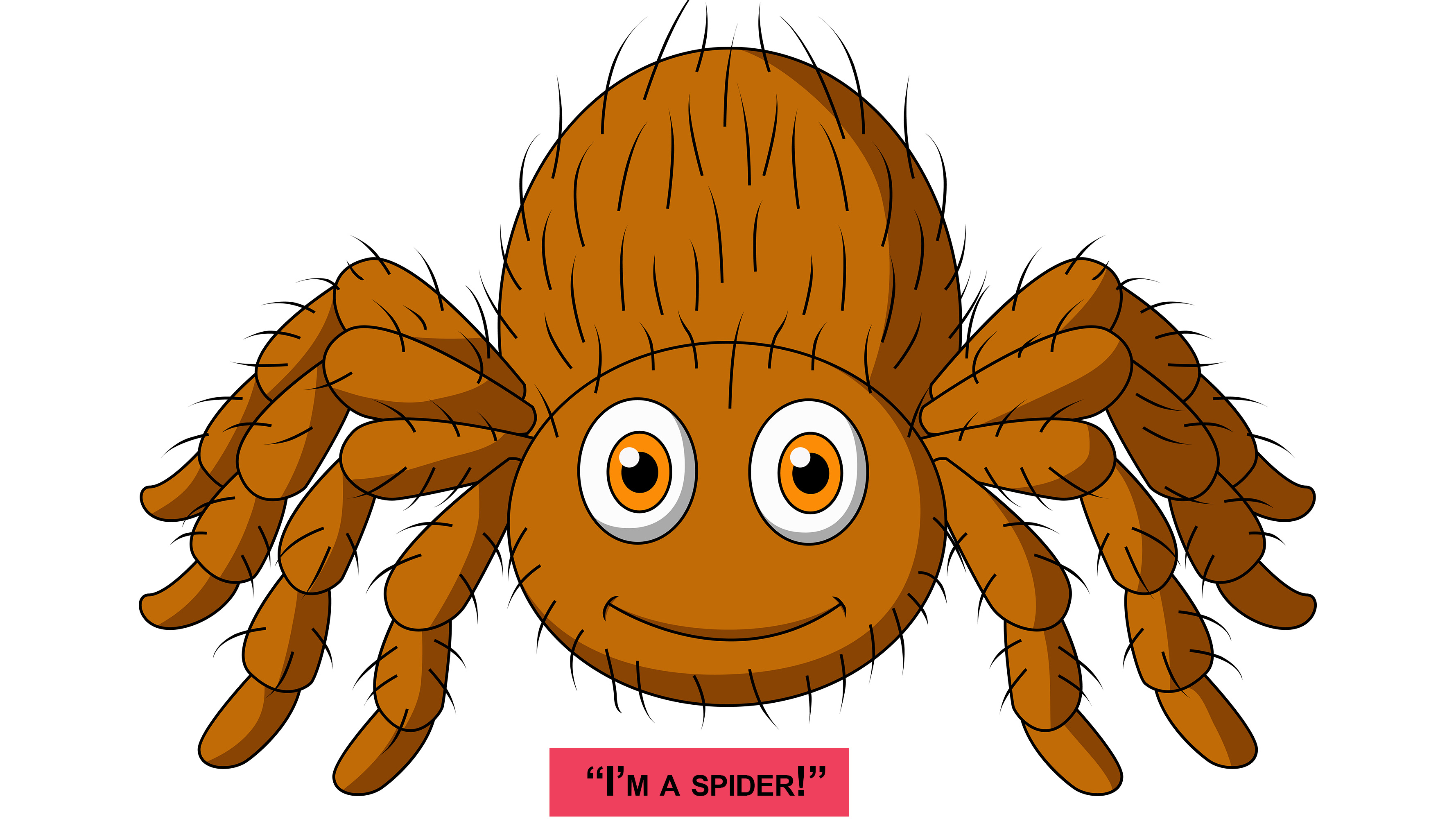
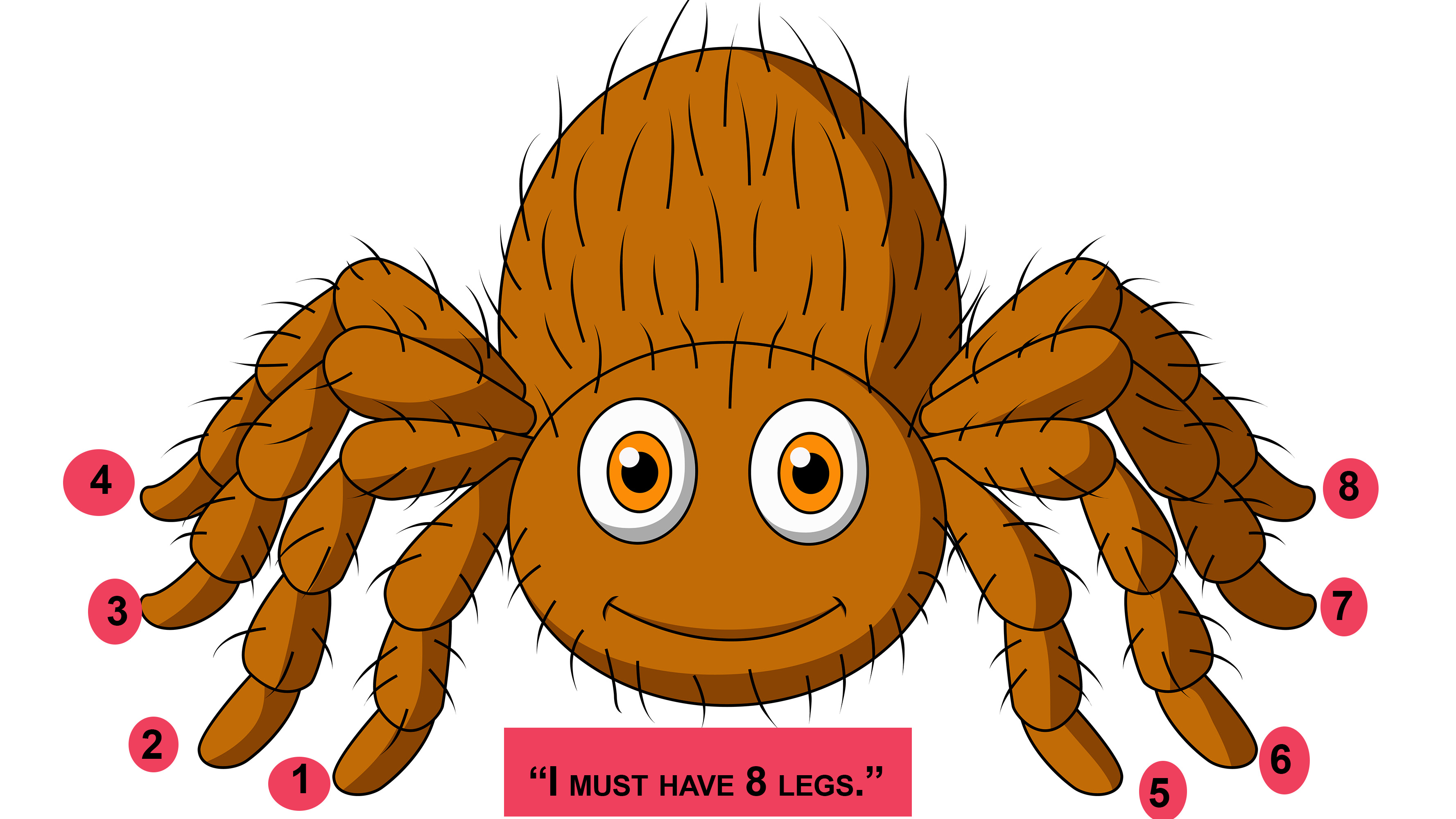
For case, "All spiders take eight legs. A tarantula is a spider. Therefore, tarantulas accept eight legs." For deductive reasoning to be audio, the hypothesis must be correct. It is assumed that the statements, "All spiders take eight legs" and "a tarantula is a spider" are true. Therefore, the conclusion is logical and truthful. In deductive reasoning, if something is truthful of a form of things in general, it is also true for all members of that course.
Deductive conclusions are reliable provided the premises are true, co-ordinate to Herr. The argument, "All bald men are grandfathers. Harold is baldheaded. Therefore, Harold is a granddad," is valid logically, merely information technology is untrue because the original premise is false.

What is anterior reasoning
While deductive reasoning begins with a premise that is proven through observations, anterior reasoning extracts a probable (but not certain) premise from specific and limited observations. There is data, and so conclusions are drawn from the data; this is called inductive logic, according tothe University of Illinois (opens in new tab) in Springfield.
"In anterior inference, we become from the specific to the general. Nosotros make many observations, discern a pattern, make a generalization, and infer an explanation or a theory," Wassertheil-Smoller told Alive Science. "In science, there is a constant interplay betwixt inductive inference (based on observations) and deductive inference (based on theory), until we get closer and closer to the 'truth,' which we can only approach but not define with complete certainty."
In other words, the reliability of a determination fabricated with anterior logic depends on the abyss of the observations. For instance, permit'south say that yous have a bag of coins; you pull three coins from the bag, and each coin is a penny. Using inductive logic, you might and then suggest that all of the coins in the bag are pennies."Even though all of the initial observations — that each coin taken from the bag was a penny — are correct, inductive reasoning does not guarantee that the conclusion will be true.
Here'southward some other example: "Penguins are birds. Penguins can't wing. Therefore, all birds tin't fly." The determination does not follow logically from the statements.
Yet, anterior reasoning has its place in the scientific method, and scientists use it to grade hypotheses and theories. Deductive reasoning then allows them to utilise the theories to specific situations.
Deductive reasoning examples
Here are some examples of deductive reasoning:
Major premise: All mammals have backbones.
Minor premise: Humans are mammals.
Conclusion:Humans have backbones.
Major premise: All birds lay eggs.
Minor premise:Pigeons are birds.
Determination: Pigeons lay eggs.
Major premise:All plants perform photosynthesis.
Modest premise:A cactus is a plant.
Conclusion: A cactus performs photosynthesis.
Inductive reasoning examples
Here are some examples of inductive reasoning:
Data:I see fireflies in my backyard every summertime.
Hypothesis:This summer, I will probably encounter fireflies in my lawn.
Data:Every dog I meet is friendly.
Hypothesis:Most dogs are usually friendly.
Data:I tend to catch colds when people around me are sick.
Hypothesis: Colds are infectious.
What is abductive reasoning
Another form of scientific reasoning that diverges from inductive and deductive reasoning is abductive. Abductive reasoning usually starts with an obviously incomplete set of observations and proceeds to the likeliest possible explanation for the data, according to Butte College (opens in new tab) in Oroville, California. Information technology is based on making and testing hypotheses using the best information bachelor. It oftentimes entails making an educated judge after observing a phenomenon for which there is no clear explanation.
For example, a person walks into their living room and finds torn-up papers all over the flooring. The person's domestic dog has been solitary in the apartment all twenty-four hour period. The person concludes that the domestic dog tore up the papers because it is the most probable scenario. Information technology's possible that a family unit member with a key to the apartment destroyed the papers, or it may take been done by the landlord, but the domestic dog theory is the most probable conclusion.
Abductive reasoning is useful for forming hypotheses to be tested. Abductive reasoning is ofttimes used by doctors who brand a diagnosis based on exam results, and by jurors who make decisions based on the evidence presented to them.
Boosted resources
- This guide from Scholastic (opens in new tab) provides ideas for teaching younger kids all about scientific reasoning.
- PBS has put together some video clips and games (opens in new tab) most deductive and inductive reasoning.
- This volume written by Christopher Moore (opens in new tab) provides information on how to use scientific reasoning in the classroom.
Source: https://www.livescience.com/21569-deduction-vs-induction.html
0 Response to "what is the method of reasoning that involves using specific facts to form a conclusion"
Post a Comment